The staged wedding
Moroccan wedding scene: negafa and caftan
What the staged Moroccan wedding at a Fes dinner show borrows from real weddings: the negafa, the changes of dress, the amariya procession and the caftan.
Reserve your place at the table ↗What the scene is
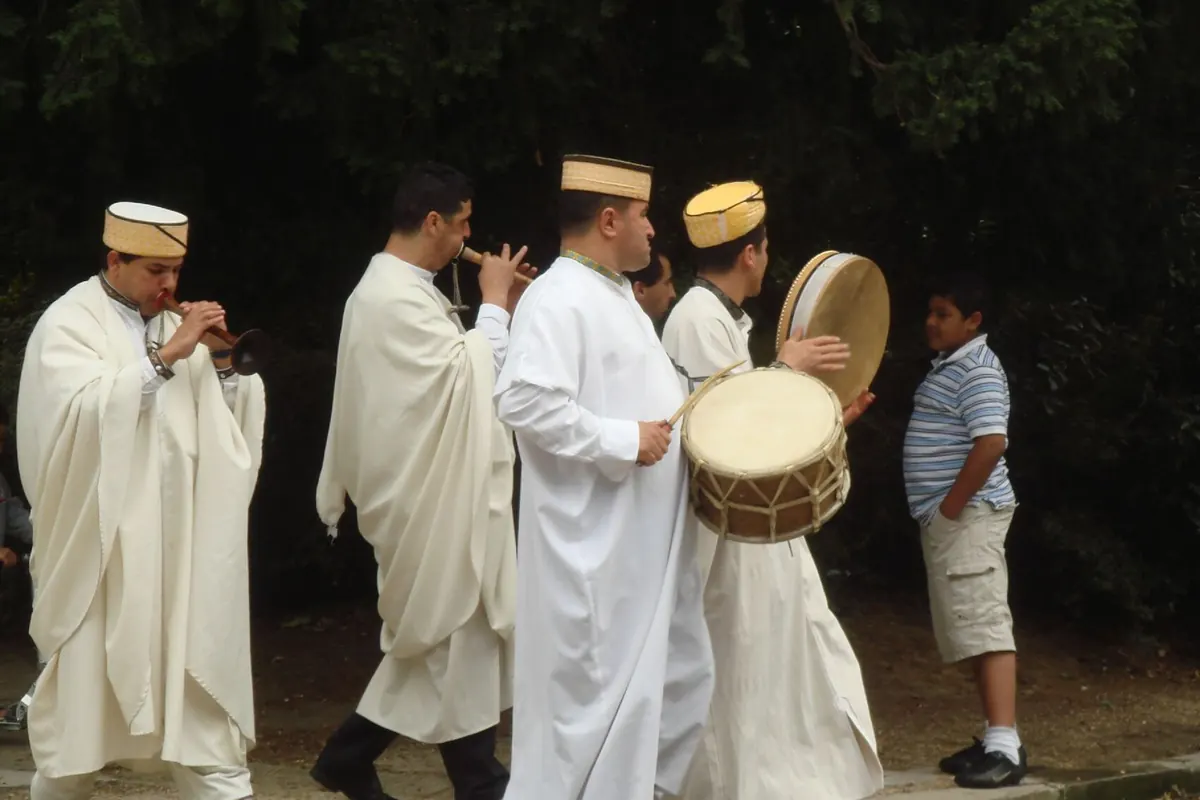
On some nights the evening includes a staged traditional Moroccan wedding, when it is available. Guest volunteers can dress up and join in, so the room becomes part of the show. It is optional and it is a performance, not a ceremony: nobody is married, and the point is to borrow the look, the music and the procession of a Moroccan wedding for the guests’ pleasure. It runs when available, not as a fixed part of every night.
Who the negafa is
The negafa is the bride’s traditional dresser and the guardian of the customs of a Moroccan wedding. Wikipedia describes it as an ancient trade reserved for women, still active in Morocco and among Moroccans abroad. She works with a team of assistants, directs the bride’s posture and movement, times each change of outfit and looks after make-up, jewellery and accessories. She also gives the bride emotional support, helping her stay calm through a long and demanding day.
Changes of dress
A Moroccan bride usually changes into three or more traditional outfits during the celebration, and the negafa makes sure each one is complete. The exact number varies from wedding to wedding. What holds is the rhythm: an entrance, a change, a return, with music announcing each new look. Timing the changes is part of the negafa’s work, so the day moves in set pieces instead of one long scene. A staged version can echo that rhythm in miniature.
The amariya
The amariya is the traditional procession in which the bride and groom are carried on a platform, and the negafa manages it. It is the part of a wedding that most clearly suits a show: movement, music and a crowd gathered around a single moment. Customs differ between families and regions, so it is best understood as a tradition with variations, not a fixed script. How closely a staged version follows it depends on the night.
The caftan and UNESCO
At its session in New Delhi in December 2025, UNESCO’s intangible heritage committee inscribed “Moroccan Caftan: art, traditions and skills”. The decision describes the caftan as a long tunic worn by people of all genders and ages on special occasions, among them weddings, baptisms, coming-of-age rituals and festivals. If you are dressed up for the staged wedding, you are borrowing a garment that has just been recognised at that level.
Belly dance and folk dance
The show lists belly dancing among its acts. Belly dance is a Middle Eastern dance built on movements of the hips and torso, and Wikipedia notes that the English name is a Western-coined exonym. It has taken many different forms depending on country and region, in both costume and style. The dancers in the courtyard belong to that wide family, so expect a local version, not a copy of any one famous style.
Joining in, or watching
Volunteering is optional, and watching is a full part of the evening. If you do take part, UK government travel advice offers a simple rule for the rest of the night: ask permission before photographing people, and follow the staff’s lead on filming. That applies to fellow guests who volunteered as much as to the performers. Photographing sensitive political or military sites is illegal, but at a dinner the rule that matters is simpler: ask first.
The garment you may put on
If you volunteer, you will dress up for the part in traditional costume. UNESCO describes the Moroccan caftan as a long tunic worn by people of all genders and ages on special occasions, so the garment is not reserved for brides. Wear simple, light clothes underneath that are easy to dress over, and leave your valuables and cash with your table or your companions before you go up.
Who this isn't for
If you dislike audience participation, tell your table quickly and enjoy the music from your seat; no one is obliged to take part. Travellers hoping for a real ceremony with real guests should know this is a staged scene, and it may not run on your night. Anyone who wants to see a genuine Moroccan wedding would need an invitation from a family, which no ticket can provide.
Sources