The table
A Moroccan table: salads, tagine, tea
How a Moroccan dinner is ordered, from the first cooked salads to the tagine or couscous and the mint tea that closes the meal, and what it means.
Reserve your place at the table ↗The order of a Moroccan meal
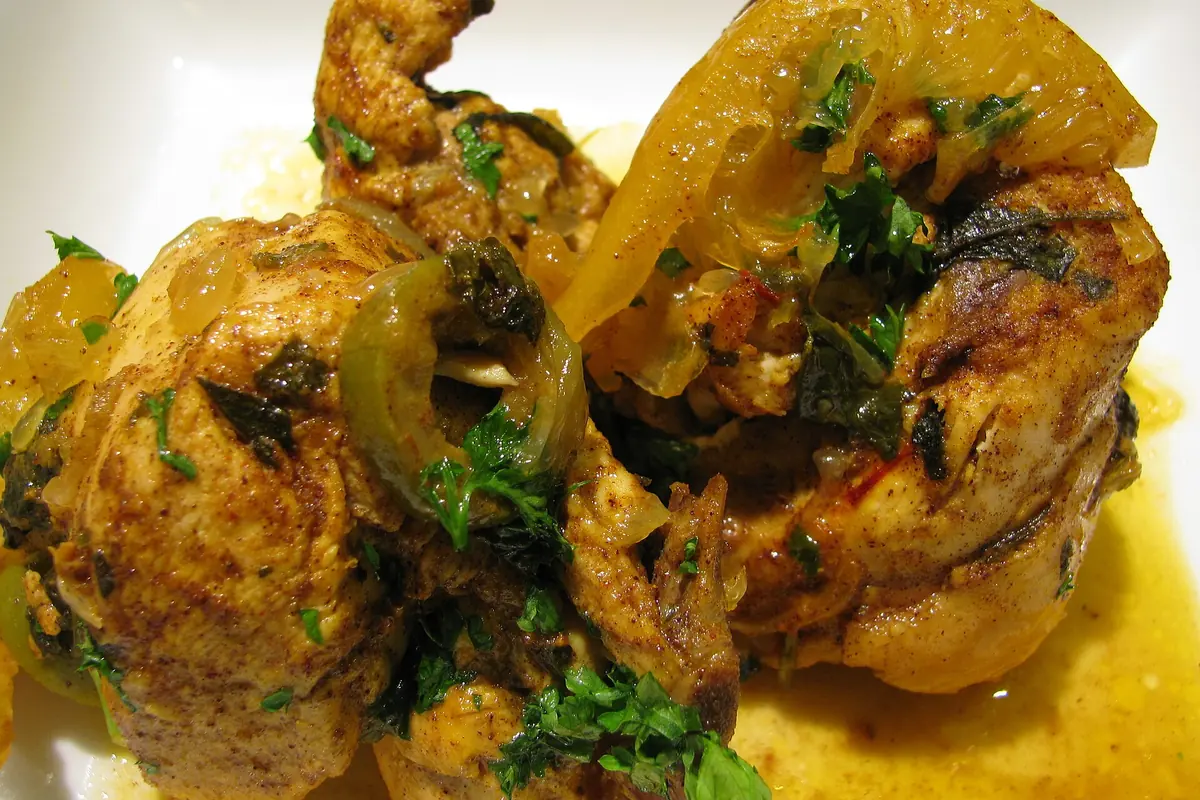
A Moroccan lunch usually opens with a run of salads, hot and cold, and a tagine comes next; a formal meal adds a lamb or chicken dish, or couscous topped with meat and vegetables. The palace dinner borrows that order, so what arrives is a meal with a beginning and an end, not a single plate. Seasonal fruit follows, then tea. Knowing the sequence helps you pace yourself, because the main dish is not the last thing to come.
Bread and hands
Traditionally Moroccans eat with their hands and use bread. A significant part of the daily meal is bread, mostly made from durum wheat semolina, known as khobz. At a table of salads and stews, bread is the scoop, so tear a piece and use it. There are also a number of flat breads and pulled unleavened pan-fried breads. The old habit is part of what makes a communal dinner feel like hospitality.
Cooked salads
Moroccan salads include both raw and cooked vegetables, served hot or cold. Zaalouk is an aubergine and tomato mixture, and taktouka, tomatoes with smoked green peppers, is described as characteristic of the cities of Taza and Fes. They are the kind of small dishes that open a Moroccan table. Treat that as background, not a menu: what the kitchen sends out on the night is its own choice.
The tagine
A tagine is a Moroccan stew named for the earthenware pot it cooks in. The pot has a shallow base and a tall cone or dome lid, which returns condensation to the dish so the food braises in minimal water. Traditionally it is cooked over hot charcoal on a clay brazier. Spiced meat, poultry or fish is combined with vegetables or fruit, and lamb is the meat most commonly eaten in Morocco.
Couscous
Couscous is small steamed granules of rolled semolina, often served with a stew spooned on top. It is a staple across the Maghreb, and in 2020 it was added to UNESCO’s Intangible Cultural Heritage list. Food writer Charles Perry, cited by Wikipedia, traces it to the Berbers of Algeria and Morocco. If you choose couscous for your main, you are eating a dish that several countries share and celebrate.
Fruit to finish
Seasonal fruit rather than cooked desserts is usually served at the close of a Moroccan meal. Wikipedia also notes that oranges and lemons are among the home-grown ingredients of Fes. The fruit is a light full stop after the main dish and clears the way for tea. A common cooked dessert is kaab el ghzal, a pastry stuffed with almond paste, but fruit is the usual close. If you are full by then, take a slice and wait for the glass.
Mint tea
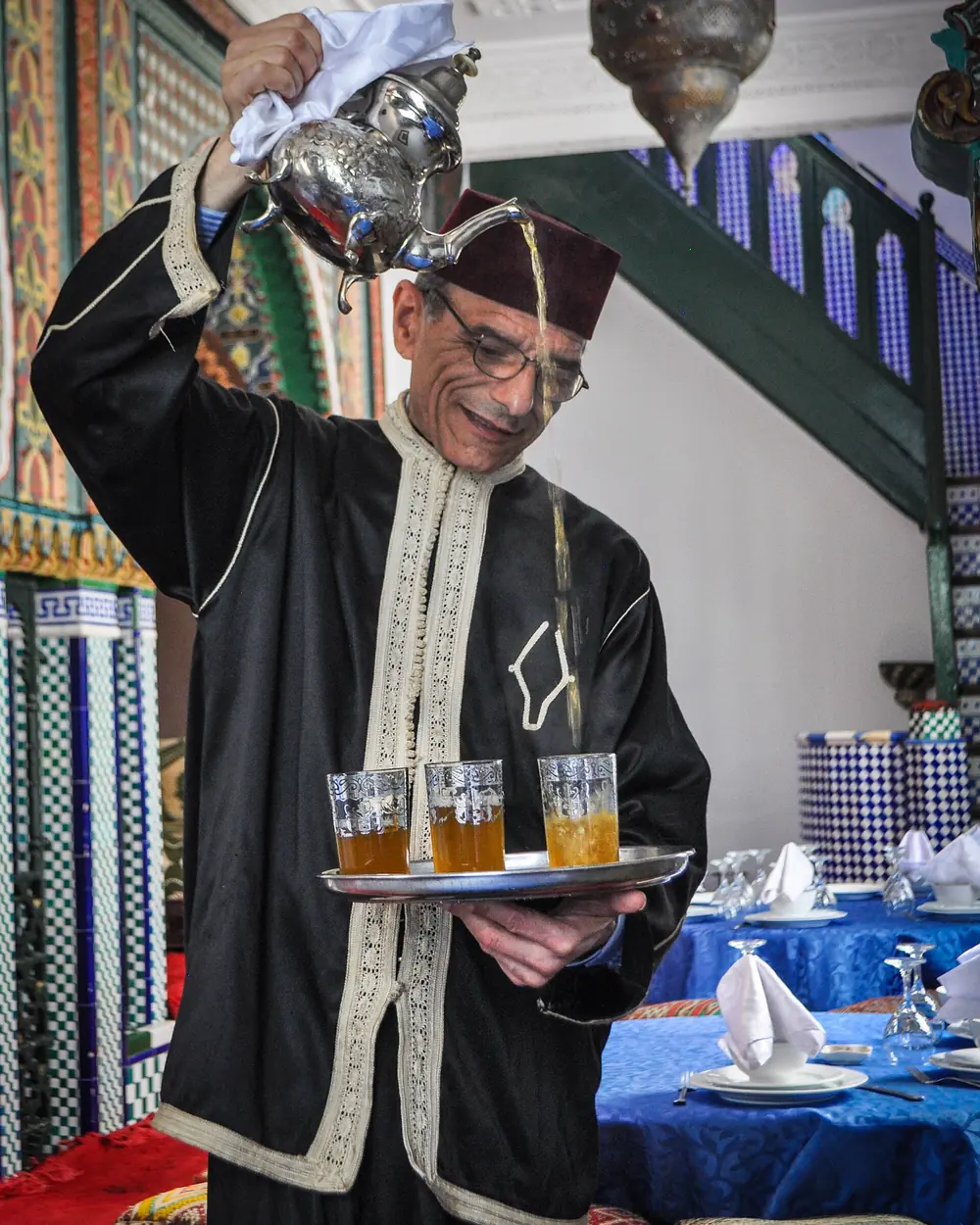
Mint tea, called atay, is the most popular drink in Morocco and a ceremony of hospitality. Wikipedia notes that at least three glasses are typically served, that the teapot is held high when pouring, and that glasses are filled in two stages, with hard sugar cones or lumps alongside. Making good tea is considered an art form, and serving it to a guest is a sign of hospitality.
The spice cupboard
Spices are used extensively in Moroccan food, among them cinnamon, cumin, turmeric, ginger, paprika, coriander and saffron. The blend called ras el hanout may draw on up to twenty-seven. Wikipedia notes that after the Idrisids founded Fes in 789, many spices were brought from the east, while ingredients such as mint, olives, saffron, oranges and lemons were home-grown. Preserved lemon, argan oil and smen, a preserved butter, are other characteristic flavourings.
Who this isn't for
If you want a drink with dinner, note that the consumption of pork and alcohol is uncommon in Morocco because of religious restrictions, and that drinks at the show are not part of the ticket and are paid for in cash. Strict vegetarians and vegans should ask the provider about the main courses before booking, because the dish choices are a set list.
Sources